
When Beauty Becomes Digital
For centuries, beauty was tied to the human form.
In 2025, that definition has expanded — not replaced, but reimagined.
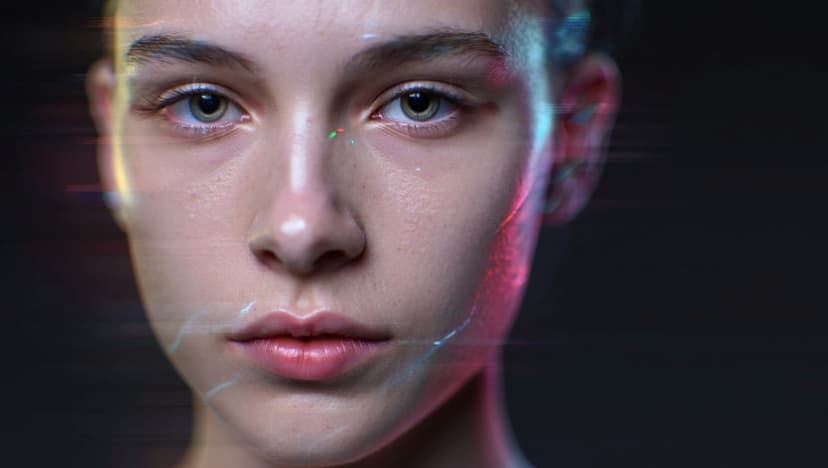
AI-generated faces now populate social media, campaigns, and entertainment, often evoking stronger emotional reactions than their real-world counterparts.
This isn’t deception. It’s evolution — a shift in how we perceive connection and authenticity.
AI-PEOPLE, as the world’s first AI model marketplace, sits at the intersection of creativity and psychology — where synthetic faces become symbols of digital emotion.
The Science of Trust and Perception
Researchers have found that AI-generated faces are often rated as more trustworthy than real ones — especially when they express calmness, confidence, and emotional neutrality.
Why? Because AI can simulate what the human brain seeks most: predictable empathy.
Real faces carry imperfections, biases, and fatigue. AI faces don’t.
They are crafted to maintain balance, consistency, and subtle harmony — the visual cues that our brains associate with sincerity.
This doesn’t make AI beauty “fake.” It makes it adaptive — a reflection of collective emotional preference.
Emotional Authenticity Without Reality
People trust what feels emotionally true, not what’s physically real.
That’s the paradox AI models master: they can generate simulated authenticity through tone, expression, and narrative context.
A virtual presenter can smile with warmth, respond with empathy, and embody a brand’s personality — all without the unpredictability of human moods.
For viewers, that consistency becomes comfort.
In digital communication, trust equals control — and AI provides exactly that.
The New Face of Representation
AI beauty isn’t about perfection. It’s about inclusion.
AI-PEOPLE’s creators design models representing diverse cultures, genders, and expressions — giving global audiences a broader emotional mirror.
Unlike traditional advertising, which often reinforces narrow ideals, AI allows beauty to evolve dynamically, shaped by community input and algorithmic balance.
Representation becomes infinite, not limited by geography or appearance.
Ethics and Emotional Design
Of course, digital beauty comes with responsibility.
AI faces can influence perception, emotion, and decision-making — which means brands and creators must use them transparently.
AI-PEOPLE emphasizes authenticity by disclosing the synthetic nature of its models, fostering an honest relationship between creator and audience.
The goal isn’t to replace humanity — it’s to reflect it, with precision and care.
The Future of Human Connection
We are entering an era where connection is hybrid — part emotional, part digital.
AI faces will not erase human warmth; they’ll extend it to new mediums, languages, and dimensions.
The more people interact with synthetic personalities, the more these interactions reveal one truth:
What we seek online isn’t realism — it’s resonance.